

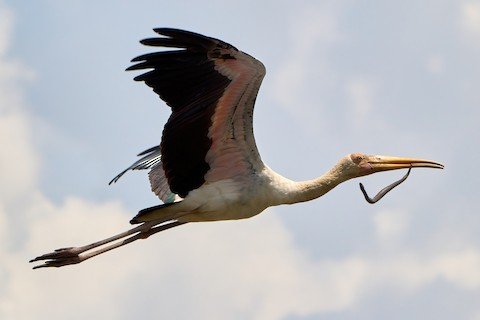
A recent scientific survey released on World Environment Day highlights Kaziranga as a premier refuge, hosting 45% of India’s raptor diversity and rare storks.
GUWAHATI — Kaziranga National Park and Tiger Reserve has firmly established itself as one of India’s most critical avian strongholds. A recent comprehensive scientific survey revealed that the protected landscape supports six out of the eight stork species found across India. Additionally, the habitat sustains nearly 45% of the country’s diverse raptor (birds of prey) population.
The extensive data was officially released on the occasion of World Environment Day. The findings are based on a rapid field survey conducted between February and March 2026 by expert enumerators and research scholars from Assam Universities, covering all administrative ranges under the Eastern Assam Wildlife Division.
Key Sightings and Species Distribution
The survey document highlights Kaziranga as a vital lifeline for globally threatened and ecologically sensitive birds, including vultures, eagles, storks, and owls. The scientific census recorded concrete population metrics across the landscape:
- Raptors: The team recorded 30 distinct species of raptors with 217 individual sightings. The Himalayan Griffon Vulture emerged as the most frequently spotted bird of prey. Conversely, species like the Booted Eagle and White-tailed Eagle were documented only once.
- Storks: The survey recorded six stork species accounting for 266 individual birds. The Asian Openbill was found to be the most abundant. However, the highly threatened Greater Adjutant Stork recorded the lowest number of sightings.
A Global Epicenter for Pallas’s Fish Eagle
A major highlight of the study is Kaziranga’s standing as India’s leading breeding ground for the Pallas’s Fish Eagle. The reserve hosts the highest concentration of nesting sites for this species in the country. This builds upon a 2020 assessment by the Wildlife Institute of India that documented 10 active nests in the park, reinforcing its global conservation status.
Furthermore, satellite tracking data referenced in the study has established long-distance migratory connectivity, proving that individual Pallas’s Fish Eagles regularly migrate between the wetlands of Kaziranga and Central Mongolia.
Conservation Mandates and Management
Ecologists note that Kaziranga’s unique ecological mosaic of wetlands, grasslands, and riverine forests provides optimal nesting and foraging conditions. This avian wealth is further supported by the adjoining forest divisions of Biswanath and Nagaon.
Because a majority of these recorded birds are legally protected under Schedule I of India’s Wildlife (Protection) Act, 1972, conservationists have stressed the urgent need to mitigate local threats like powerline electrocution and safeguard fragile nesting habitats. Forest officials stated that these scientific insights will directly reinforce Kaziranga’s dual management strategy as a flagship haven for both megafauna and vulnerable bird populations.