

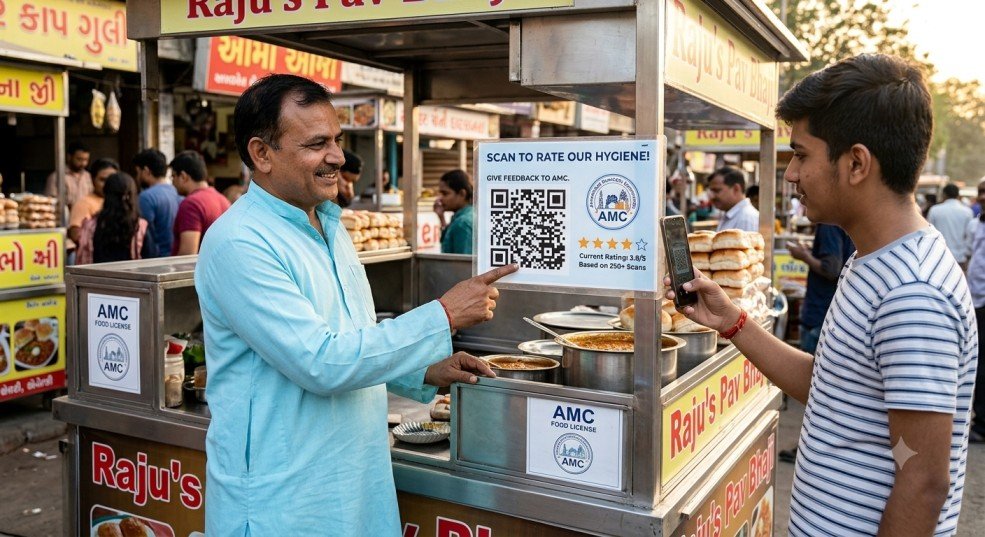
The Ahmedabad Municipal Corporation (AMC), in a major push toward public health and food safety, has officially rolled out a digital feedback mechanism for its street food sector. Ahmedabad residents can now directly rate and report on the hygiene and cleanliness standards of local street vendors simply by scanning a QR code.
This citizen-centric initiative arrives amidst a broader, nationwide crackdown by the Food Safety and Standards Authority of India (FSSAI) against hazardous practices like wrapping food in newspapers. By putting monitoring power into the hands of consumers, the AMC aims to bridge the gap between regulatory guidelines and ground-level execution.
How the QR Code Feedback System Works
The digital initiative is designed to create an instant, transparent channel between consumers and urban civic body inspectors.
- Scan to Rate: Food stalls across the city will feature visible QR codes assigned to their specific business profiles.
- Hygiene Parameters: Customers can scan the code via their smartphones to submit an instant “hygiene rating” based on visible food safety metrics, including personal cleanliness of handlers, water safety, and trash disposal.
- Direct Legal Action: AMC officials have confirmed that any vendor consistently receiving poor ratings, or flagged for violating specific food safety laws, will face immediate penalties and strict legal action under local municipal and food safety provisions.
Aligning with the FSSAI Nationwide Crackdown on Newspaper Packaging
The timing of Ahmedabad’s digital push is critical. The FSSAI has recently re-emphasized its nationwide ban on the use of newspapers for food packaging, citing severe chemical and microbial health risks.
Despite the strict 2018 regulation being actively codified, many small-scale vendors still rely on old newspapers for serving fried snacks due to low costs. Through the new QR code system, Ahmedabad residents can now instantly flag vendors who continue to use toxic, ink-laden newsprint instead of approved alternatives like butter paper, fresh banana leaves, or certified food-grade packaging.
Why Public Oversight is Crucial for Food Safety
While regulatory bodies like the FSSAI formulate strict safety frameworks, monitoring millions of independent street vendors across India’s vast urban spaces remains an uphill task for enforcement teams alone.
“Surveillance becomes exponentially more effective when the consumer base acts as active inspectors. A digital footprint makes it nearly impossible for persistent violators to fly under the radar.” — Food Safety Specialist
By combining digital tech like AMC’s QR system with aggressive ground inspections, municipalities can effectively enforce the transition to safer packaging, eliminating chronic heavy metal ingestion (from ink components like lead and cadmium) and foodborne pathogen transmission at the grassroots level.
What Happens Next for Non-Compliant Vendors?
The AMC has specified that the introduction of public feedback forms is not merely data collection. It serves as a direct trigger for physical inspections.
- Warning and Education: First-time offenders or vendors with borderline hygiene scores will be directed to switch to food-grade materials and undergo training.
- Fines and Confiscation: Persistent usage of prohibited packaging (like newspapers) or operating in unhygienic environments will lead to spot fines and seizure of business carts.
- Licensing Suspensions: Severe or repetitive non-compliance will lead to cancellation of vendor permits under the Food Safety and Standards Act, 2006.