

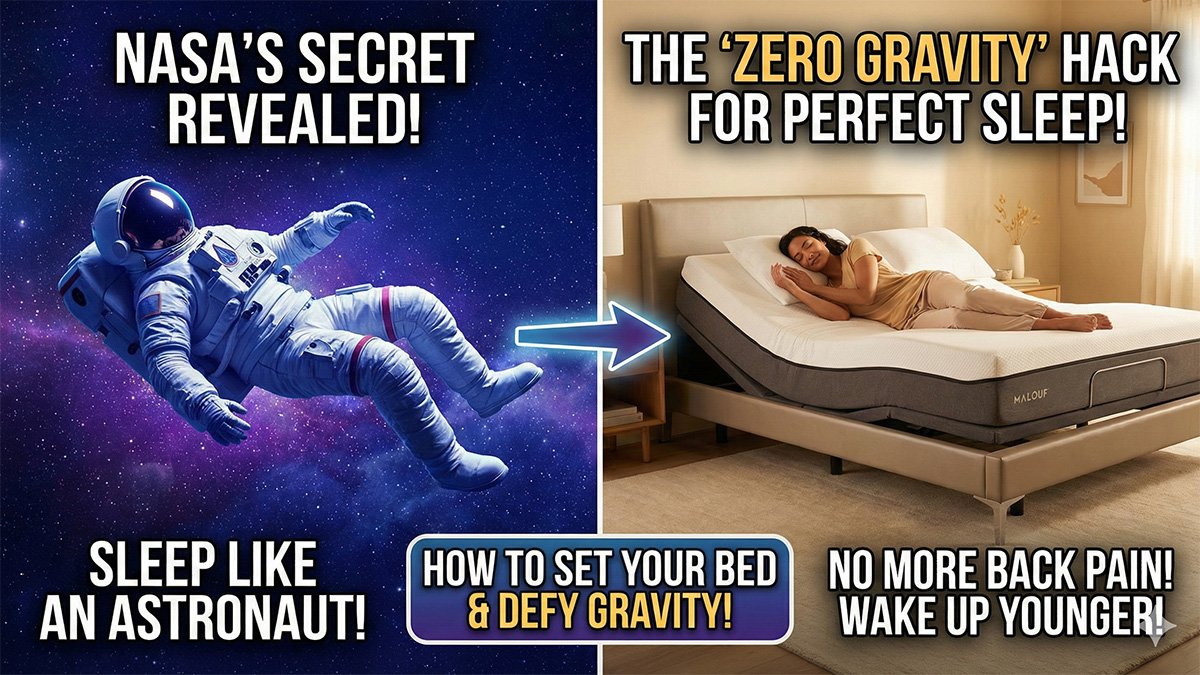
As the modern world grapples with a systemic sleep deprivation epidemic, millions of individuals are turning to biological hacks to achieve optimal nighttime recovery. The latest wellness frontier looking to disrupt the multi-billion-dollar sleep industry is the “Zero-Gravity” (Zero-G) sleep position. Originally mapped by NASA as the “neutral body position,” this posture replicates how astronauts float naturally when weightless in microgravity, promising an engineered solution to chronic physical stress.
Understanding the Mechanics
In standard bedding setups, lying completely flat forces the human spine to fight against gravity, creating concentrated pressure points on the lower back, shoulders, and hips. The Zero-G position strategically alters this dynamic by gently reclining the torso and elevating the legs slightly above the heart level. By maintaining a torso-to-thigh angle of roughly 120 degrees and keeping the knees slightly bent, the body distributes its weight evenly. This alignment mimics weightlessness, allowing the musculoskeletal system to completely settle.
The Positive Impacts: Clinical and Anatomical Benefits
Transitioning to a Zero-G posture offers distinct, immediate physiological advantages:
- Spinal Decompression: By neutralizing the body’s posture, it removes the compressive gravitational load from the lumbar spine, offering relief to individuals suffering from chronic lower back pain or sciatica.
- Mitigating Acid Reflux (GERD): Elevating the upper body utilizes gravity naturally to keep stomach acids from traveling up the esophagus, drastically reducing nighttime heartburn.
- Eliminating Snoring and Sleep Apnea: Raising the head prevents the tongue and soft palate from collapsing into the back of the throat, keeping airways open and reducing obstructive sleep apnea.
- Enhanced Circulation: Elevating the lower extremities facilitates more efficient venous blood return back to the heart, minimizing leg swelling (edema) and reducing the risk of varicose veins.
The Negative Impacts: Practical and Physical Limitations
Despite its therapeutic merits, the position presents structural and financial drawbacks:
- Restricted Mobility (Side & Stomach Sleepers): The Zero-G position strictly mandates back sleeping. Individuals who naturally rotate to their sides or stomachs will find the position highly restrictive, leading to muscle stiffness if they try to force it.
- High Economic Barrier: Achieving a true, stable Zero-G alignment generally requires purchasing expensive motorized adjustable bed bases, making it financially inaccessible to a broader demographic.
- Potential Joint Stiffness: Remaining locked in a fixed, semi-flexed knee position for eight uninterrupted hours can cause morning stiffness or hip flexor tightness in older adults.
Lifestyle Integration
For the modern urban professional, integrating Zero-G sleep can fundamentally upgrade daytime productivity by lowering cortisol (stress) levels and improving deep-sleep metrics. However, experts note that physical hacks cannot entirely substitute for fundamental sleep hygiene. To truly maximize the lifestyle benefits of this NASA-inspired posture, it must be paired with a consistent circadian rhythm, minimal pre-bed blue light exposure, and a cool sleeping environment.