

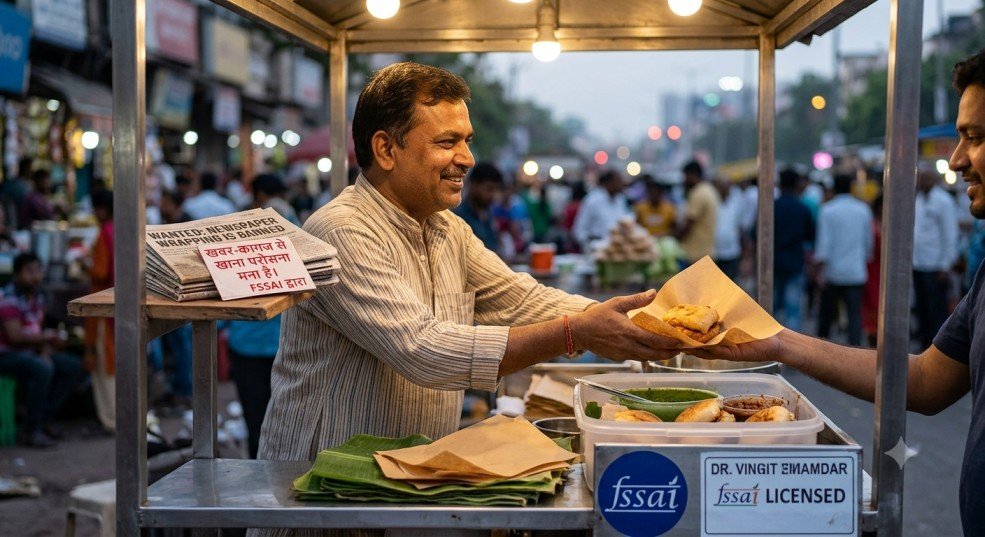
The Food Safety and Standards Authority of India (FSSAI) has issued a nationwide crackdown and a renewed advisory warning food vendors to immediately halt the practice of using newspapers to wrap, pack, or serve food.
While grabbing a hot vada pav, samosa, or pakora wrapped in yesterday’s news has been a deeply ingrained tradition across Indian streets, the apex food regulator warns that this convenience comes with a severe cost to public health.
The Trigger Behind the Crackdown
The immediate catalyst for this nationwide reminder was a joint enforcement action conducted by the FSSAI’s Western Region office and the Brihanmumbai Municipal Corporation (BMC). A famous vada pav vendor in Mumbai was caught using newspapers to pack and serve food to customers.
Recognizing that this hazardous practice remains widespread among street hawkers, small eateries, and local markets, the FSSAI stepped in to enforce a strict, comprehensive directive across all states.
Why Newspaper Packaging is Hazardous to Health
The FSSAI’s warning isn’t just about aesthetics or basic cleanliness—it is backed by critical scientific hazards.
1. Toxic Printing Ink Migration
Newspaper printing inks are a complex chemical cocktail consisting of dyes, pigments, binders, solvents, and additives. Most critically, these inks often contain heavy metals, specifically lead, cadmium, and chromium.
2. The Dangerous Chemistry of Heat and Oil
The danger multiplies exponentially when hot, oily, or moist food is placed on the paper.
- Heat and Lipids act as solvents: The high temperature and fats in fried foods facilitate a process called chemical migration.
- Direct Leaching: The ink essentially dissolves and leaches directly into the food, ensuring that toxic heavy metals are ingested by the consumer.
3. Biological Pathogen Transport
A newspaper travels a high-risk transit route before reaching a food stall. From the printing press to delivery agents, transport vehicles, and multiple handlers, it accumulates dust, environmental pollutants, and surface contaminants.
- Microbiologists warn that newspapers frequently host pathogenic bacteria like Escherichia coli (E. coli), Staphylococcus aureus, and Salmonella, alongside viruses like Norovirus, increasing the risk of severe foodborne illnesses.
Serious Long-Term Health Risks
According to health experts, chronic exposure to the elements leached from newspaper ink can result in systemic toxicity:
- Heavy Metal Poisoning: Prolonged intake of lead can cause irreversible neurological damage, kidney malfunction, and cognitive impairment—particularly in developing children.
- Carcinogenic Risks: Many of the synthetic dyes and solvents used in mass printing are recognized endocrine disruptors and potential carcinogens, which can increase the risk of metabolic disorders and cancers over time.
What the Law Says
The use of newspapers for food is not just a health hazard; it is completely illegal.
The FSSAI reiterated that the Food Safety and Standards (Packaging) Regulations, 2018 explicitly prohibit the use of newspapers or similar unapproved printed materials for storing, wrapping, covering, or serving food. Furthermore, vendors are legally barred from using newspapers to soak up excess oil from freshly fried items.
| Restricted Practices | Approved Alternatives |
| Wrapping street foods (Samosas, Vada Pavs) | Butter paper / Greaseproof paper |
| Serving hot snacks on paper sheets | Fresh banana leaves |
| Absorbing excess oil from fried items | Food-grade blotting sheets / paper towels |
| Takeaway food packaging | Certified food-grade containers |
Who Must Comply?
The directive leaves no loopholes and applies to every tier of the food and beverage industry:
- Street vendors, hawkers, and petty retailers
- Dhabas, restaurants, and Quick Service Restaurants (QSRs)
- Cloud kitchens and catering services
- Mobile food kiosks
The FSSAI, alongside state food authorities, is stepping up surveillance and local inspections to enforce compliance under the Food Safety and Standards Act, 2006.
A Call to Action for Consumers
The regulator has urged citizens to remain vigilant. Consumers are advised to refuse food served in newspapers or non-food-grade materials and to report non-compliant vendors, prioritizing their long-term health over traditional convenience.