

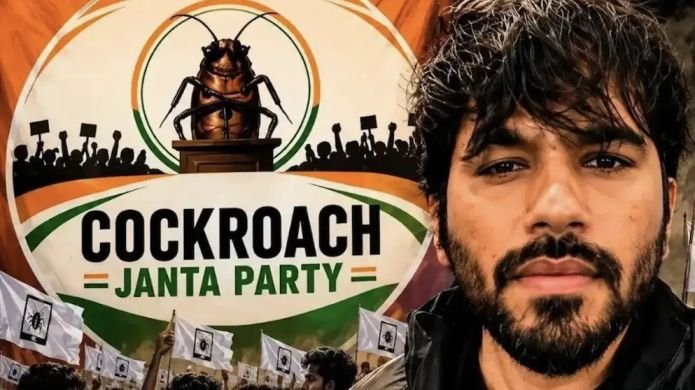
NEW DELHI — The national capital is bracing for a high-stakes demonstration on June 6, 2026, as the Cockroach Janta Party (CJP)—a rapidly growing youth pressure group—gathers to demand the immediate resignation of Union Education Minister Dharmendra Pradhan. The agitation stems from intense nationwide scrutiny over recent anomalies in high-stakes examinations, including the structural mismanagement of the NEET-UG medical test and evaluation discrepancies in the Central Board of Secondary Education (CBSE) Class 12 exams.
The Flight of Dissent and Strict Protest Codes
CJP founder and digital strategist Abhijeet Dipke is scheduled to land at New Delhi’s Indira Gandhi International Airport at 8:00 AM from Boston. Confirming his departure on social media, Dipke posted on X: “Leaving my fate in the hands of the Constitution. #JaiBhim.”
To prevent security gridlocks, CJP spokespersons Saurav Das and Ashutosh Ranka issued an urgent appeal to their massive social media following—which exceeds 22 million on Instagram—explicitly instructing supporters to avoid gathering at the airport. Instead, protestors have been ordered to assemble directly at the Parliament Street Police Station at 9:00 AM, where organizers, alongside prominent Magsaysay Award-winning climate activist Sonam Wangchuk, will formally apply for sit-in permissions at Jantar Mantar.
On the eve of the assembly, the group released a unique operational code of conduct to ensure a peaceful satyagraha:
- The Do’s: Arrive with family members; carry the Indian Tricolour alongside an educational textbook; offer fresh flowers to on-duty police personnel; apply sunscreen, wear caps, and maintain heavy hydration against the summer heat.
- The Don’ts: Do not carry any formal political party or organizational banners; do not engage with online or physical provocateurs; and do not arrive on an empty stomach.
Judicial Refusal and Security Deployments
As tensions mounted, the Delhi High Court intervened today, June 5. A vacation bench comprising Justices Saurabh Banerjee and Amit Sharma officially refused an urgent listing of a Public Interest Litigation (PIL) filed by the Save India Foundation. The petition had desperately sought immediate court-mandated restrictions, crowd-control blockades, and preventive security deployments at Delhi’s highways, metro stations, and transport hubs to curb the influx of young protestors.
Despite the court’s refusal to halt the movement pre-emptively, the Delhi Police has taken no chances. Over 1,000 security personnel, anti-riot squads, and multi-layered barricades have been deployed across Central Delhi. Authorities warned that no formal pre-approved permission for a mass gathering at Jantar Mantar has been authorized, as such clearances require an advance application window of several days.
The Education Framework in Crisis
The CJP’s satire-turned-political movement highlights a deepening trust deficit within India’s elite testing architecture. The group has heavily criticized the Ministry of Education’s recent decision to transfer the CBSE Chairman and Secretary, labeling the bureaucratic reshuffle an “eyewash” that shifts blame away from ministerial accountability.
While public figures like actor Prakash Raj and Shiv Sena (UBT) leader Aaditya Thackeray have thrown their weight behind the protest, the Ministry of Education maintains that centralized investigative audits and technological overhauls are underway to protect examination sanctity without fracturing the ongoing academic calendar.