

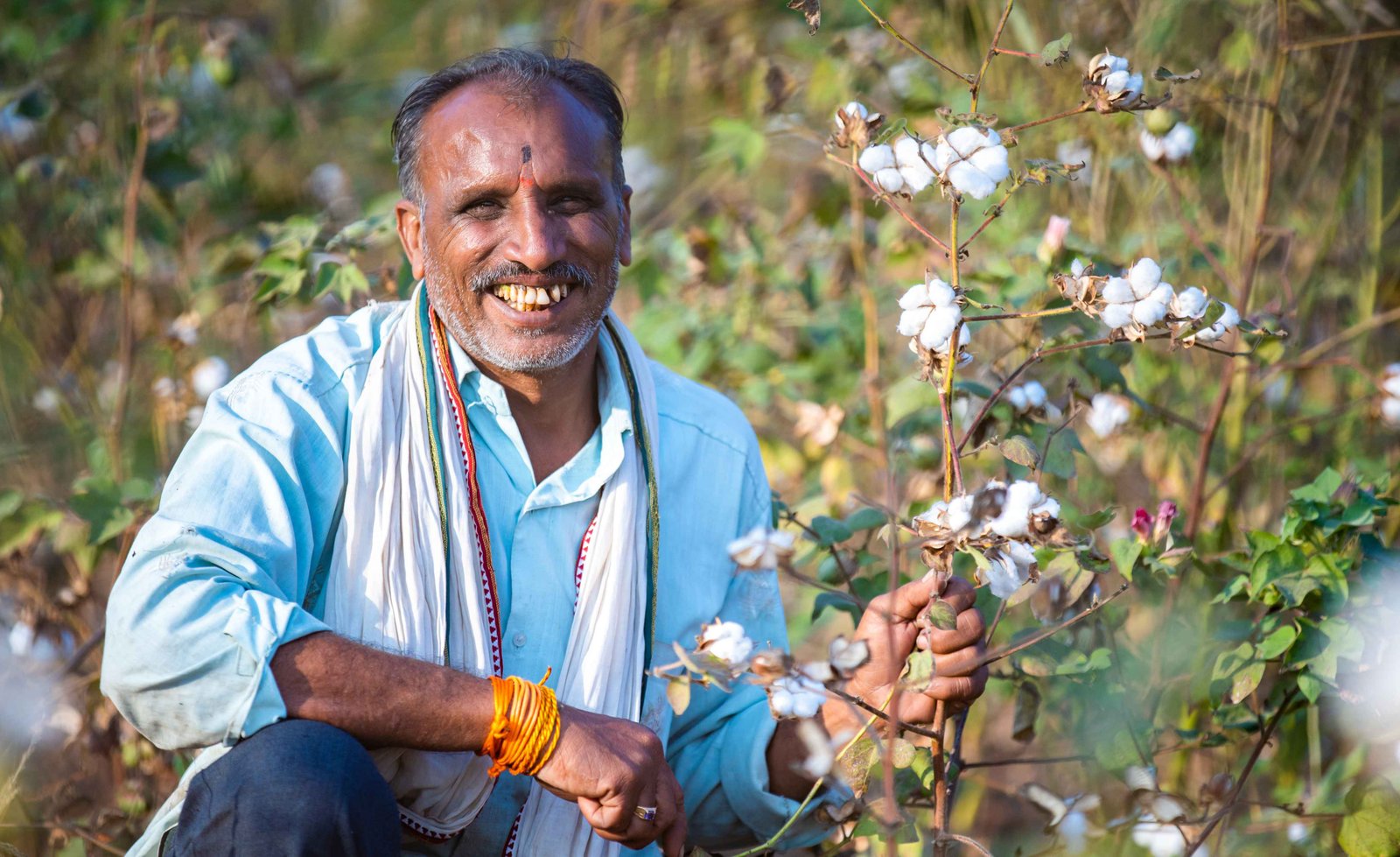
The Crisis: A Vicious Cycle of Distress
For millions of cotton farmers in rain-fed regions like Vidarbha and Odisha, the once-profitable commercial crop has become a synonym for despair. Climate change, marked by erratic monsoons and heatwaves, combined with an input-intensive monocropping model, has pushed smallholders into a deadly spiral of debt. With rising costs for Bt seeds, chemical fertilisers, and pesticides, coupled with volatile market prices, the traditional model of cotton farming is failing, often resulting in tragic consequences.
The Solution: Cotton-Based Agroforestry
To break this cycle, a climate-resilient alternative is gaining traction: Cotton-Based Agroforestry. By integrating trees, bamboo, fruit-bearing plants, and fodder species directly into cotton fields, farmers move away from the high-risk monocropping model.
Why this works:
- Economic Safety Net: Trees like teak, mango, and drumstick provide income beyond the cotton harvest, insulating farmers from market shocks.
- Soil Restoration: Trees improve soil organic carbon, fix nitrogen, and prevent erosion, reversing the degradation caused by years of chemical use.
- Climate Resilience: By creating protective microclimates, trees reduce heat stress on cotton crops and improve water retention in drought-prone landscapes.
- Ecological Pest Control: Agroforestry creates natural habitats for birds and beneficial insects, significantly reducing the need for expensive and harmful pesticides.
A Path to Dignity
Agroforestry does more than heal the land; it restores rural livelihoods. It opens doors to year-round employment, improves household nutrition, and empowers women through diversified income streams like honey collection, fruit marketing, and fodder management. However, for this to scale, it requires more than just farm-level adoption; it needs institutional support through FPOs, technical training, and policies that remove barriers to tree-based farming.
In an era of climate uncertainty, moving away from chemical-intensive monocropping is not just an environmental choice—it is a survival strategy.