

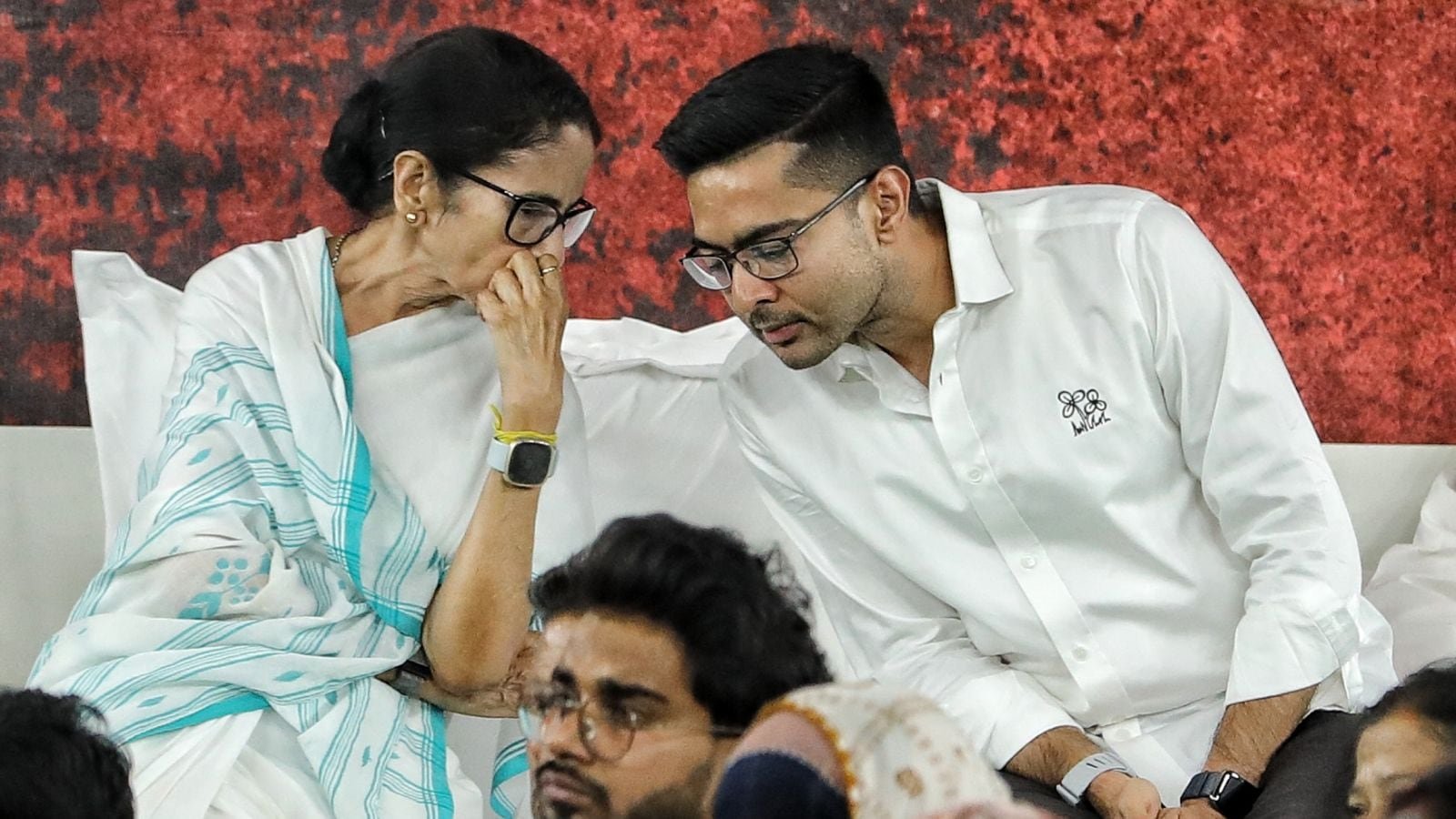
KOLKATA / NEW DELHI — The Trinamool Congress (TMC) has plunged into the gravest internal crisis of its 28-year history. Following an unprecedented mutiny where 60 out of the party’s 80 newly elected MLAs in West Bengal openly rebelled, senior leaders warn that a massive vertical split in the party’s parliamentary unit in New Delhi is now “just a matter of time.”
The political storm peaks just ahead of party supremo Mamata Banerjee’s scheduled visit to Delhi on June 8 for a crucial I.N.D.I.A. bloc meeting.
The Numbers Game and Anti-Defection Law
The TMC currently holds a significant presence in Parliament with 28 members in the Lok Sabha and 13 in the Rajya Sabha. To completely bypass the stringent provisions of the Anti-Defection Law, any breakway rebel faction requires a two-thirds majority. This translates to a minimum requirement of 20 Lok Sabha MPs and 9 Rajya Sabha MPs.
Senior TMC leader and Rajya Sabha MP Sukhendu Sekhar Roy openly expressed panic on Friday, noting that while the Upper House unit remains secure, the Lok Sabha unit is on thin ice:
“I have never seen around 60 MLAs leave in such a short span of time. What I am saying is that a similar reaction is likely in the Lok Sabha too.”
Insiders confirm that at least 20 Lok Sabha MPs are already in direct negotiations with the Bharatiya Janata Party (BJP), a development corroborated by senior BJP leaders who admit to being in continuous contact with disgruntled TMC lawmakers.
High-Stakes Assemblies and Legal Warfare
The rebellion, spearheaded by expelled leaders Ritabrata Banerjee and Sandipan Saha, has completely disrupted the state legislature. In a swift administrative coup, West Bengal Assembly Speaker Rathindra Bose officially recognized Ritabrata Banerjee as the Leader of the Opposition (LoP), alongside Akhruzzaman as Chief Whip and veteran leaders like Javed Khan and Sabina Yasmin as deputy leaders.
In a retaliatory offensive, Mamata Banerjee convened an emergency National Working Committee meeting on Friday evening at her Kalighat residence, attended by loyalists Abhishek Banerjee, Sreerampur MP Kalyan Banerjee, and former Kolkata Mayor Firhad Hakim. Following the huddle, Kalyan Banerjee announced that the TMC will officially move the Calcutta High Court on Monday (June 8) to legally challenge the Speaker’s recognition of the rebel bloc.
Deepening Fractures and High-Profile Exits
The dissent is rapidly spreading beyond the state assembly. High-profile Barasat MP Kakoli Ghosh Dastidar, a four-time Lok Sabha member and long-time Mamata loyalist, sent shockwaves through the camp by resigning from all organizational posts. Her exit followed her abrupt removal as the parliamentary party’s chief whip, with Ghosh Dastidar citing extreme disappointment over institutional corruption and the party’s internal operational mechanics.
Even staunch loyalists like Kalyan Banerjee have publicly admitted to a pervasive anxiety over party unity, openly stating that Mamata Banerjee’s historical leniency toward corrupt practices during her tenure has fueled this massive wave of internal resentment. While Mamata’s managers have launched an aggressive counter-poaching campaign targeting rural and minority MLAs, the rebel faction remains defiant, claiming they have already established themselves as the “Asli” (real) Trinamool in the Assembly floor.