

MAJOR CONSERVATION MILESTONE AS RARE REPTILE
REAPPEARS IN ASSAM AFTER DECADES
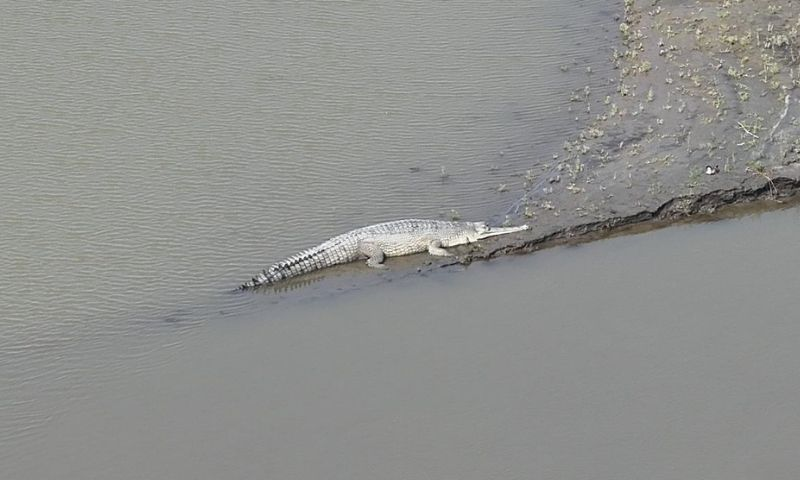
GUWAHATI: In a development that has sent ripples of excitement through the global conservation community, the critically endangered Gharial (Gavialis gangeticus) has been repeatedly sighted within the Burapahar Range of Kaziranga National Park. Once feared to have vanished from the Brahmaputra’s waters, the presence of this ancient predator signals a historic revival for Assam’s river ecosystem.
A Month of Rare Sightings
The first breakthrough occurred on April 26, when forest guards on routine patrol spotted a gharial basking on a sun-drenched sandbar near the Maite APC area. This strategic location, where the Difolu and Brahmaputra rivers converge, provides the calm waters and sandy banks essential for the species’ survival. The momentum continued into May, with tourist guide Shishukanta Nath capturing photographic evidence on May 8. These frequent sightings have turned social media into a buzz of optimism, with the Assam Chief Minister’s Office hailing the event as a “remarkable moment” for the state’s natural heritage.
The Indicator of River Health
Wildlife experts emphasize that the gharial is much more than just a rare sight; it is a primary indicator of a healthy river system. As an apex aquatic predator, its return suggests that the Brahmaputra’s ecology is recovering, likely due to sustained protection efforts and improved wetland management. With only 650 to 1,000 breeding adults left globally—mostly concentrated in the Chambal Sanctuary of North India—the discovery of a resident population in Assam is of critical international importance.
Breaking a 75-Year Silence
Historically, gharials were a common sight across Northeast India’s major river basins. However, they were largely believed to have disappeared locally following the 1950s due to habitat loss and changing river dynamics. While unconfirmed reports had surfaced over the years from areas like Manas and Dibru Saikhowa, these recent confirmed sightings in Burapahar and Biswanath mark the most significant comeback in nearly 75 years. The Kaziranga Park Authority, in collaboration with the Wildlife Institute of India (WII) and WWF, is now
considering ambitious reintroduction programs to bolster this fragile population, potentially bringing in individuals from Madhya Pradesh to ensure the species thrives once again in the heart of Assam.