

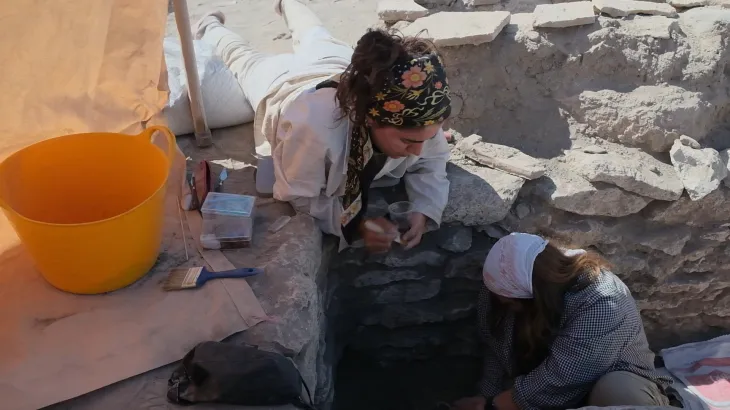
ANATOLIA, TÜRKIE — In a groundbreaking archaeological discovery, researchers studying the ruins of one of the world’s oldest urban settlements have uncovered definitive evidence of an ancient, female-led society in present-day Türkiye. The findings offer a rare, well-preserved glimpse into a prehistoric civilization that upends traditional assumptions about early human social structures.
The Discovery at Çatalhöyük
The evidence was unearthed during an extensive excavation of Çatalhöyük, a renowned 9,000-year-old proto-city located in the Konya Plain of Central Anatolia.
To understand the social hierarchy and domestic life of this ancient community, researchers conducted an in-depth anthropological analysis of 300 skeletons recovered from beneath the floors of the mud-brick homes.
Key Findings: Women and Girls at the Helm
The skeletal data and burial arrangements revealed an egalitarian yet distinctly matriarchal civilization where families and domestic units were systematically headed by women and girls.
- Lineage and Leadership: Genetic tracing and spatial analysis of the burials indicate that lineage, property, and household authority were passed down through the female line.
- No Gender-Based Nutritional Divide: Chemical analysis of the bones showed that women, men, children, and infants shared identical diets and lifestyles, proving that the female leadership structure did not inherently translate into oppressive social stratification.
Redefining Our Understanding of Ancient History
For decades, historians have largely viewed early agrarian civilizations through a patriarchal lens. The definitive evidence of a female-led society at Çatalhöyük challenges these conventional narratives, demonstrating that early human urbanization was incredibly diverse and that matriarchal leadership was highly successful in sustaining large-scale, cooperative communities.