

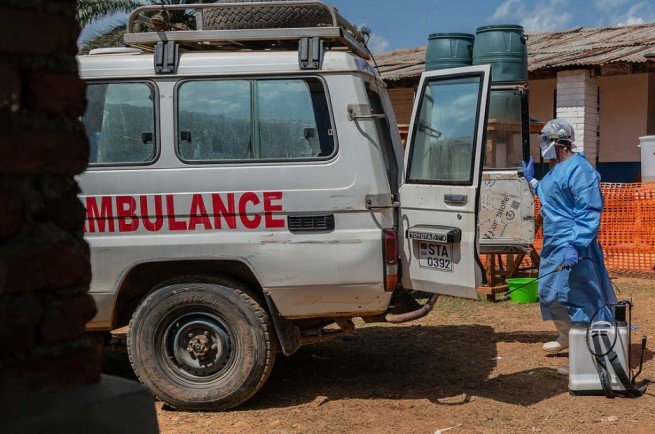
MONGBWALU, ITURI PROVINCE — Frontline medical workers in the Democratic Republic of the Congo (DRC) are risking their lives to contain a rapidly mounting Ebola crisis while working without pay, adequate rest, or basic protective gear.
At the center of this crisis is Dr. Richard Lokudu, the medical director of Mongbwalu General Referral Hospital. Operating at the epicenter of the outbreak, Dr. Lokudu and his team face an influx of highly infectious patients by day and urgent notifications of suspected cases late into the night. Despite the extreme personal risk, compensation has been virtually non-existent.
“I have not received my allowance, and what happened to others could happen to me as well,” Dr. Lokudu told The Associated Press, referencing colleagues who have contracted and died from the virus. “Despite all the infection prevention and control measures we are implementing, we do not know what may happen.”
The Mining Town at the Epicenter
The outbreak is fueled by the unique socioeconomic conditions of Mongbwalu, a bustling gold-mining hub in the Ituri province. The town draws thousands of migrant laborers who work in cramped, muddy pools, narrow pits, and deep caves. Off the clock, workers live in densely populated, low-income camps with poor sanitation and little access to healthcare infrastructure.
These crowded environments are ideal for the transmission of Ebola, which spreads rapidly through direct contact with the bodily fluids—such as blood, sweat, vomit, and feces—of infected individuals or deceased victims. The situation is further complicated by deep-seated community skepticism and mistrust, making it incredibly difficult for medical teams to isolate cases.
“It is one thing to be far away and hear statistics being reported, but what is happening on the ground is enormous,” Dr. Lokudu emphasized. “People are sacrificing their rest and comfort for this cause… These workers should receive their salaries regularly.”
The Broader Crisis: Tracking the Rapid Expansion
Since the initial local reports, the situation has escalated into a severe international health emergency. The World Health Organization (WHO) formally designated this outbreak a Public Health Emergency of International Concern (PHEIC).
The outbreak involves the Bundibugyo virus strain, a rare variant of Ebola. Unlike the more common Zaire strain, there are currently no licensed vaccines or approved antiviral treatments for the Bundibugyo species. Doctors are forced to rely strictly on supportive care—managing symptoms like hydration and fever—to save lives.
The epidemic’s trajectory shows a dramatic surge in cases and widening geographical reach over the past few weeks:
| Metric / Region | Initial Discovery | Current Status & Expansion |
| Total Cases (DRC) | 452 cases | Over 321+ laboratory-confirmed cases (with hundreds more suspected under investigation) |
| Geographic Spread | Mongbwalu & Bunia (Ituri) | Extended south into North Kivu (Beni, Oïcha) and South Kivu (Miti-Murhesa) |
| International Spread | Contained to DRC | Crossed into Uganda (including cases treated in Kampala) |
| Fatalities | 82 deaths | Dozens of confirmed deaths, including multiple frontline healthcare workers |
A System Fractured by Chronic Neglect
International aid groups point out that the speed of the virus’s spread is a direct consequence of a severely underfunded infrastructure. Global health experts note that the virus had a massive “head start” because local clinics lacked the specialized diagnostic tools to identify the rare Bundibugyo strain when it first began circulating silently.
“There has been an erosion of the health system,” explained Heather Kerr, the DRC country director for the International Rescue Committee. “There has not been investment… and this has been going on for years.”
The humanitarian response continues to face severe operational bottlenecks. Active conflict from local armed groups, forced community displacements, and deep distrust have led to instances of community resistance—including the tragic destruction of temporary isolation centers in certain health zones.
With regional transmission risks now classified as “very high,” the Africa CDC and the WHO have initiated a joint continental emergency response plan. However, for doctors like Lokudu on the immediate front line, the immediate priority remains survival: securing the basic masks, gloves, and reliable pay needed to keep fighting.