

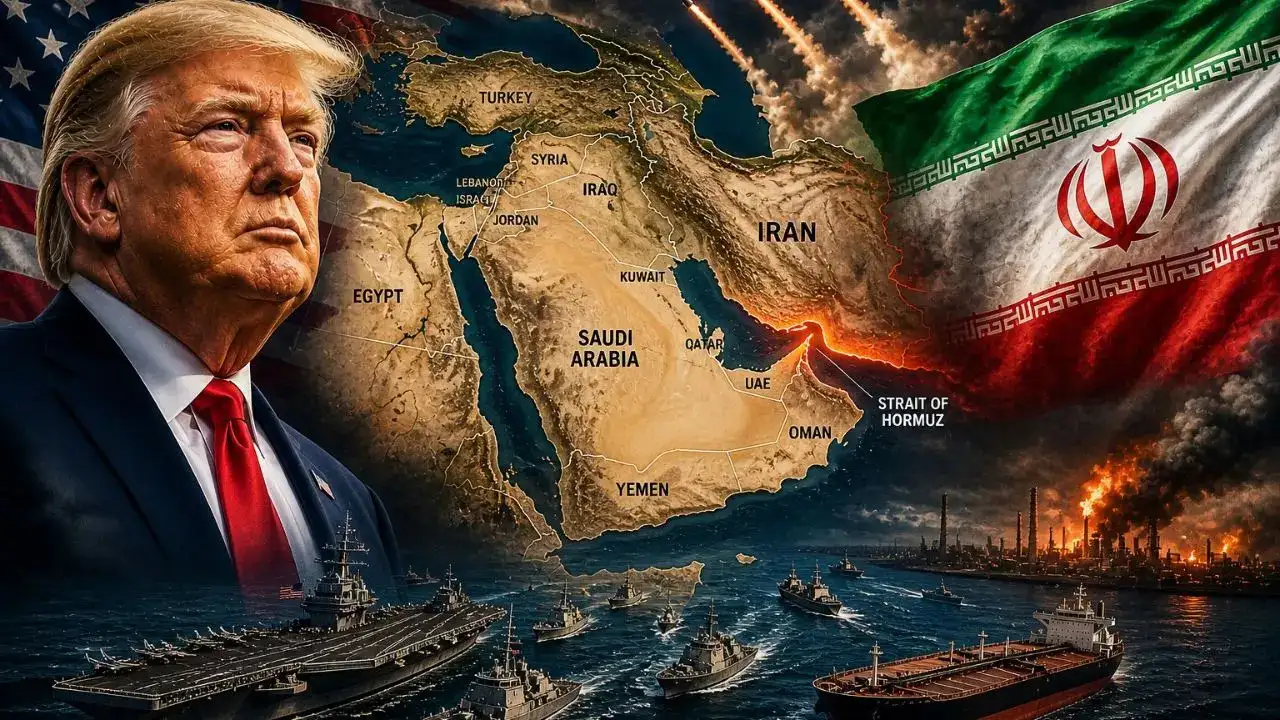
GENEVA / WASHINGTON — In the most significant diplomatic breakthrough since the outbreak of hostilities in early 2026, the United States and Iran have reached a preliminary peace agreement aimed at ending their multi-month war, reopening the blocked Strait of Hormuz, and creating a path to curb Tehran’s nuclear ambitions.
The announcement, delivered on Sunday, details a 1.5-page Memorandum of Understanding (MOU) that implements a critical 60-day ceasefire extension while technical negotiations on a broader, permanent treaty commence. According to U.S. Vice-President JD Vance, the milestone document has already been digitally signed by both nations. Representatives from Washington and Tehran are scheduled to convene in Geneva this Friday for a formal, in-person signing ceremony.
The Blueprint for Peace: Hormuz Reopens and Blockades Lifted
The immediate and most tangible global impact of the agreement is the scheduled reopening of the Strait of Hormuz. The vital maritime chokepoint—responsible for the transit of roughly 20% of the world’s petroleum and liquefied natural gas—had been blocked by Iran since the outbreak of the war on February 28, 2026, triggering an unprecedented global energy crisis.
Under the terms of the newly struck accord:
- Maritime Freedom: The U.S. naval blockade on Iranian ports will terminate, and commercial vessels will once again be granted unrestricted, toll-free passage through the Strait of Hormuz.
- The 60-Day Clock: A formal 60-day window of technical talks will begin immediately following Friday’s ceremony to draft a comprehensive treaty addressing the complex details of Iran’s nuclear enrichment capabilities and uranium stockpiles.
- Cessation of Hostilities: Mediators indicate that the pact demands an immediate and permanent termination of military operations across all regional fronts.
The Multi-Billion Dollar Dispute: Frozen Assets and Relief
While global financial markets surged and international oil benchmarks tumbled by over 5% following news of the deal, immense tension remains regarding the implementation details. A major narrative war has already erupted over the timeline for economic relief.
Iranian state media outlets have aggressively claimed that the accord guarantees the immediate release of $24 billion in long-frozen Iranian foreign assets, asserting that half ($12 billion) must be unfrozen before final technical negotiations even begin.
However, Vice-President JD Vance and senior U.S. officials have swiftly moved to correct the record, asserting that “zero” assets have been released thus far. The White House emphasizes that while asset unfreezing and phased sanctions relief are on the table as “small gestures” to build trust, no large-scale funds will be accessible until Iran demonstrates absolute compliance with nuclear inspections and halts the funding of regional proxy groups.
A Tenuous Truce: The Israeli Wildcard
Despite widespread international praise from European Union leadership and United Nations Secretary-General António Guterres, the upcoming Geneva ceremony faces critical vulnerabilities.
The primary geopolitical obstacle stems from Jerusalem. While Pakistani and Qatari mediators stated that the peace deal mandates a cessation of military actions on all fronts—including Lebanon—Israeli Prime Minister Benjamin Netanyahu and Defense Minister Israel Katz have explicitly rejected this premise. Israeli leadership maintains that the nation is not bound by the Washington-Tehran agreement and intends to sustain military operations against Hezbollah indefinitely, casting a volatile shadow over the durability of the 60-day truce.
What’s Next?
Preparatory bilateral delegations are meeting in Doha, Qatar this week to smooth over procedural friction ahead of Friday’s formal gathering in Switzerland. For the global community, the ultimate success of the Geneva summit hinges on whether the 1.5-page framework can survive intense political opposition at home and military realities on the ground in the Middle East.