
A Massive Boost to Public Sector Employment
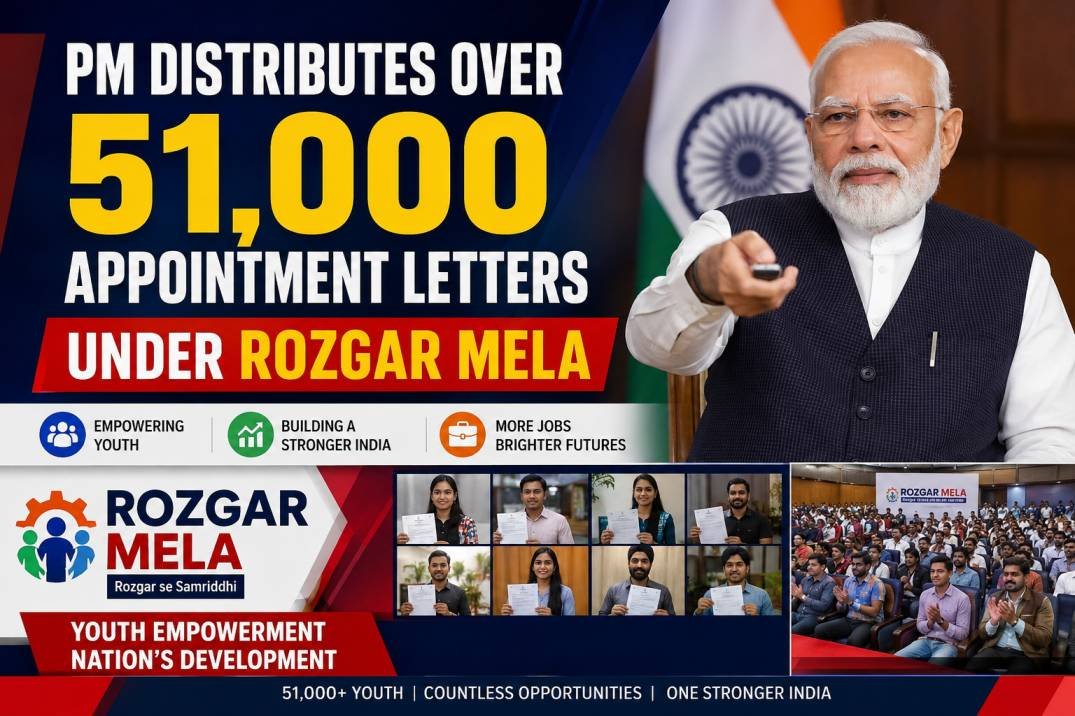
In a major stride toward driving youth employment and strengthening governance, the Prime Minister has distributed more than 51,000 appointment letters to newly inducted recruits under the Rozgar Mela initiative. The mass recruitment drive, conducted via video conferencing across multiple locations nationwide, underscores the government’s commitment to providing structured, institutional employment opportunities to the country’s youth.
The new recruits are set to join various Ministries, Departments, and Central Public Sector Undertakings (CPSUs) across the Government of India. These appointments span crucial operational grids, including the Ministry of Defence, Ministry of Railways, Ministry of Home Affairs, Department of Posts, and the Department of Revenue, among others.
Focus on Technology and Speed in Governance
Addressing the new appointees, the Prime Minister highlighted that the Rozgar Mela has streamlined the entire recruitment process in the public sector. By eliminating archaic, time-consuming bureaucratic delays and integrating transparent, technology-driven selection models, the government has significantly shortened the timeline between applications and final postings.
The newly inducted employees are also being integrated into the Karmayogi Prarambh module—an online orientation course hosted on the iGOT Karmayogi platform. This digital training ecosystem prepares young professionals with the essential skills, code of conduct, and technological awareness needed to deliver efficient, citizen-centric governance from day one.
Fueling National Development and Infrastructure
The Prime Minister emphasized that these 51,000 new personnel are entering the workforce at a critical phase of India’s infrastructural and economic expansion. Whether managing modern rail networks, securing borders, processing digital public finances, or expanding rural postal banking, the new recruits are being positioned as the executive driving force behind national development.
The initiative not only provides immediate livelihood security to tens of thousands of families but also creates a cascading effect on the wider economy by enhancing institutional efficiency and expanding public service delivery across both urban and rural landscapes.