
Strategic Diplomacy in France
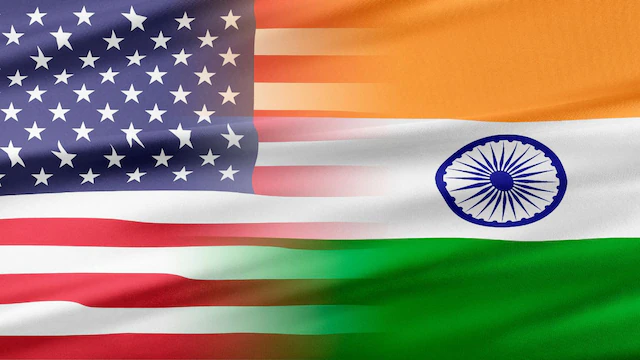
WASHINGTON / NEW DELHI — As global leaders prepare to converge in France for the upcoming G7 Leaders Summit, high-stakes trade negotiations between the United States and India are set to take center stage. Senior U.S. administration officials confirmed on Saturday, June 13, 2026, that President Donald Trump and Indian Prime Minister Narendra Modi will directly address bilateral commerce during their scheduled one-on-one meeting next week.
While the discussions represent a critical step forward in stabilizing economic ties, Washington has tempered immediate expectations, explicitly stating that a final, comprehensive trade agreement is not imminent at the summit itself.
U.S. Trade Representative Jamieson Greer to Visit India Post-G7
In a clear sign that both nations are moving past mere diplomatic rhetoric into concrete negotiations, the White House announced a major follow-up diplomatic mission. U.S. Trade Representative Jamieson Greer is officially scheduled to travel to India during the week of June 21, immediately following the conclusion of the G7 gathering.
The senior administration official emphasized that Greer’s upcoming trip to New Delhi is designed to hammer out the intricate legal and technical frameworks of the proposed deal, reiterating that a major bilateral agreement remains highly “possible” in the near term.
Aligning Modi’s Ambitious Vision with U.S. Economic Interdependence
The upcoming dialogue reflects a mutual recognition of the changing dynamics of the Washington-New Delhi axis. U.S. officials noted that the trade architecture is a foundational pillar of a broader geopolitical alignment in the Indo-Pacific region.
“We know that Prime Minister Modi is quite ambitious about the role he sees for India, and the absolute importance of the U.S.-India relationship. We think a potential trade deal is part of that.”
— Senior U.S. Administration Official
Under Prime Minister Modi, India has consistently pushed to elevate its standing as a global manufacturing powerhouse and an alternative to traditional supply chains. U.S. officials view a potential trade pact as a mechanism to integrate American technology, energy, and agricultural exports with India’s rapidly expanding consumer market and digital economy.
Navigating Key Stumbling Blocks in the Negotiations
The reason a deal will not be signed next week in France comes down to complex, long-standing commercial friction points that require meticulous deliberation by Ambassador Greer’s team. Negotiators from both sides are currently working through several sensitive sectors:
- Tariffs and Market Access: Washington continues to push for a significant reduction in Indian tariffs on American medical devices, agricultural goods, and automobiles.
- Digital Trade and Data Localisation: U.S. tech giants have raised concerns over New Delhi’s stringent data storage regulations, while India seeks to protect its domestic digital ecosystem and ensure data sovereignty.
- Intellectual Property (IP) Rights: Protecting American pharmaceutical patents remains a persistent priority for U.S. trade representatives, contrasting with India’s robust generic drug manufacturing priorities.
The Road Ahead for the Indo-Pacific Economic Partnership
Despite the lack of an immediate signing ceremony at the G7, the structured sequencing of the Trump-Modi meeting followed by Greer’s immediate deployment to New Delhi underscores a shared urgency.
Rather than aiming for a rushed, superficial statement at a multilateral summit, both administrations appear committed to building a durable, legally binding framework. The outcomes of the post-G7 meetings in New Delhi are expected to define the trajectory of U.S.-India economic statecraft for the remainder of the decade.