
NEW DELHI / JIND
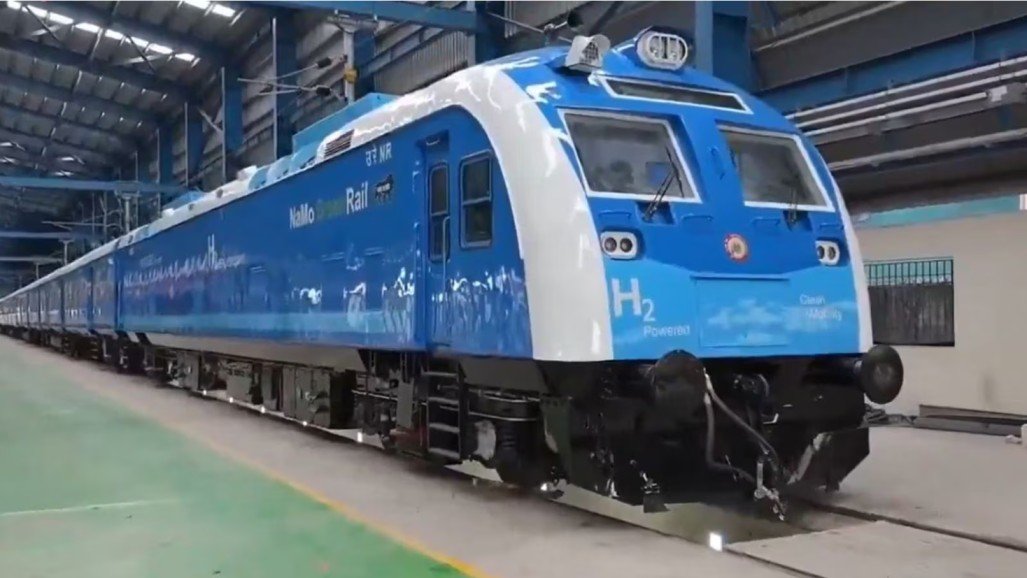
In a historic leap toward carbon-neutral public transport, Indian Railways has officially greenlit the introduction of a cutting-edge, 10-car hydrogen fuel cell-based trainset on the Northern Railway network. With this milestone, India enters an elite global club alongside Germany, Japan, China, and the United States, positioning itself at the absolute forefront of sustainable eco-friendly mobility.
The pathbreaking pilot operations are slated to commence soon on the dedicated Jind-Sonipat section in Haryana, backed by a newly established, indigenous hydrogen storage and refueling facility at Jind.
The Mechanics of Zero-Emission Rail The upcoming hydrogen trainset will be propelled by a high-capacity 1,200 kW hydrogen fuel cell system, allowing it to hit a maximum operational speed of 75 kmph. Unlike conventional diesel locomotives that release heavy greenhouse gases, hydrogen fuel cell technology generates electricity onboard through a chemical reaction between hydrogen and oxygen, leaving behind pure water vapor as the only emission.
PESO and RDSO Enforce Fail-Safe Safety Protocols Given the highly volatile nature of compressed hydrogen gas, the administration is deploying multi-layered, zero-compromise safety measures:
- Statutory Clearances: The Petroleum and Explosives Safety Organisation (PESO) has officially granted the mandatory operational license for the safe storage and dispensing of compressed hydrogen at the Jind plant.
- Uninterrupted Logistics: The facility features a high-pressure hydrogen compression system for rapid refueling, supported by an upcoming standby compressor unit to ensure round-the-clock, uninterrupted operations.
- Continuous Monitoring: The production and dispensing facility is fitted with advanced hydrogen leak detectors and thermal flame sensors. These sensors will undergo strict, periodic cleaning to prevent dust accumulation.
- Operational Handholding: While the Research Designs and Standards Organisation (RDSO) finalizes official operation and maintenance manuals, a dedicated team of trained technical engineers will physically accompany the train during its initial phase of commercial operations to manage real-time diagnostics. Dedicated maintenance protocols are also being set up at the Shakurbasti facility.