

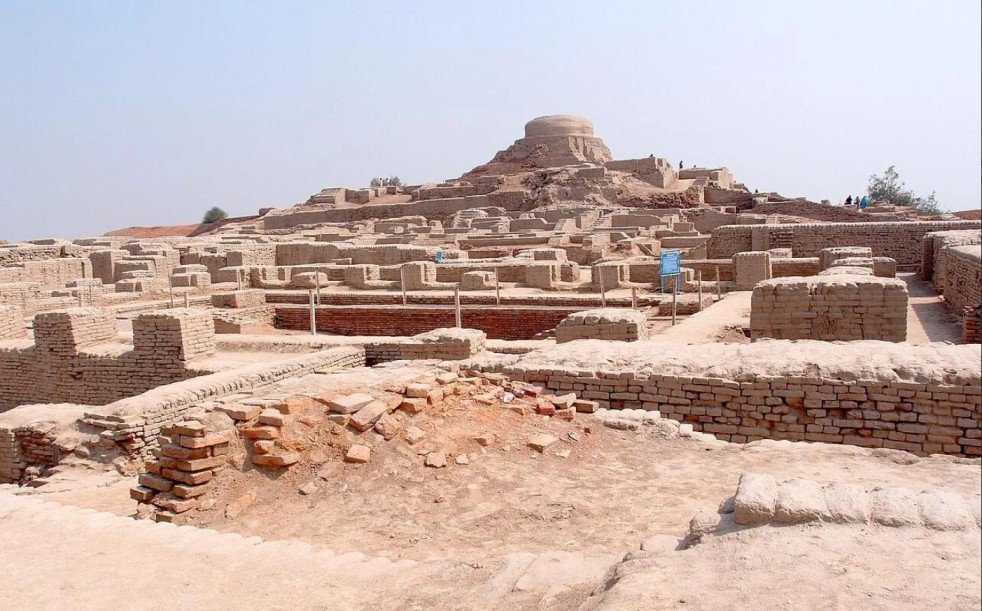
A Modern Lesson from an Ancient City
In a groundbreaking revelation that challenges long-held assumptions about urban development, a new study indicates that Mohenjo-daro, the largest urban center of the ancient Indus Valley Civilisation, became progressively more equal as it grew wealthier.
While contemporaneous civilisations in Egypt, Mesopotamia, and Greece concentrated their wealth to build towering monuments for rulers, Mohenjo-daro took a radically different path. Published in the prestigious journal Antiquity, the research demonstrates that instead of accumulating resources in the hands of a ruling elite, this ancient metropolis optimized its peak productive years by distributing a high standard of living across ordinary households.
Narrowing the Wealth Gap Over Time
Conducted by researchers at the University of York, the study analyzed legacy architectural data from the site to track how the city changed over generations. The findings were striking:
- Shrinking Residential Disparity: As Mohenjo-daro matured into a massive, highly productive urban hub, the structural gap between the largest and smallest homes significantly narrowed.
- Village-Level Equality: By its later years, the wealth disparity within this vast urban center dropped to levels typically found only in tiny, early farming villages, proving that large-scale urbanization does not naturally demand social stratification.
“While ancient Egyptians were building pyramids for god-kings, and the Greeks were constructing massive palaces at Knossos, the people of the Indus were building something entirely different,” explained Adam Green, the lead author from the University of York’s Department of Archaeology. “Instead of allowing the perks of society to accumulate with a tiny elite, the city’s amenities were widely distributed amongst the everyday households.”
Collective Governance and Fair Trade
The evidence of this shared prosperity is deeply embedded in the physical layout and artifacts of the city. Unlike other ancient powers, Mohenjo-daro lacks heavily guarded palaces, temples, or gold-laden tombs. Instead, its civic focus was structural, public, and deeply practical:
- Decentralized Business Tools: The famous Indus seals, which served as vital tools for trade, administration, and business, were consistently recovered from everyday residential homes rather than being locked away in elite public administrative complexes.
- Standardized Market Systems: The widespread usage of a strictly standardized system of weights and measures ensured that market transactions remained transparent and fair for all citizens.
- Public Infrastructure Investment: Massive community efforts were poured directly into public goods, including meticulously planned street layouts, routine city maintenance, and sophisticated, brick-lined drainage networks that served entire neighborhoods uniformly.
Challenging Modern Economic Assumptions
The implications of the study extend far beyond archaeology, striking at the heart of modern economic theory. For decades, policymakers and economists have often treated rising wealth inequality as an unfortunate but inevitable byproduct of rapid economic growth and technological advancement.
Mohenjo-daro stands as an ancient counter-narrative. The data proves that during the exact historical period where the city’s internal inequality dropped to its lowest point, its overall economic productivity soared. The researchers emphasize that sharing power and resources equitably may not have been a casual choice for the Indus people, but rather the exact secret ingredient that sustained their collective prosperity for centuries.
Those interested in exploring how archaeology maps the physical layout of these egalitarian spaces, the full study can be accessed via The University of York Research Portal.